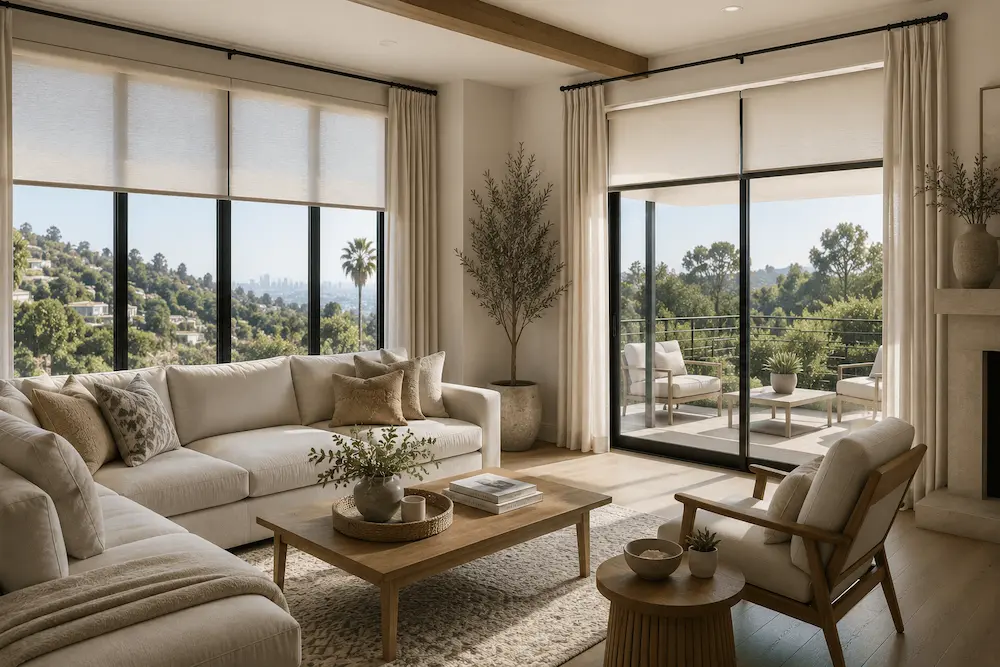
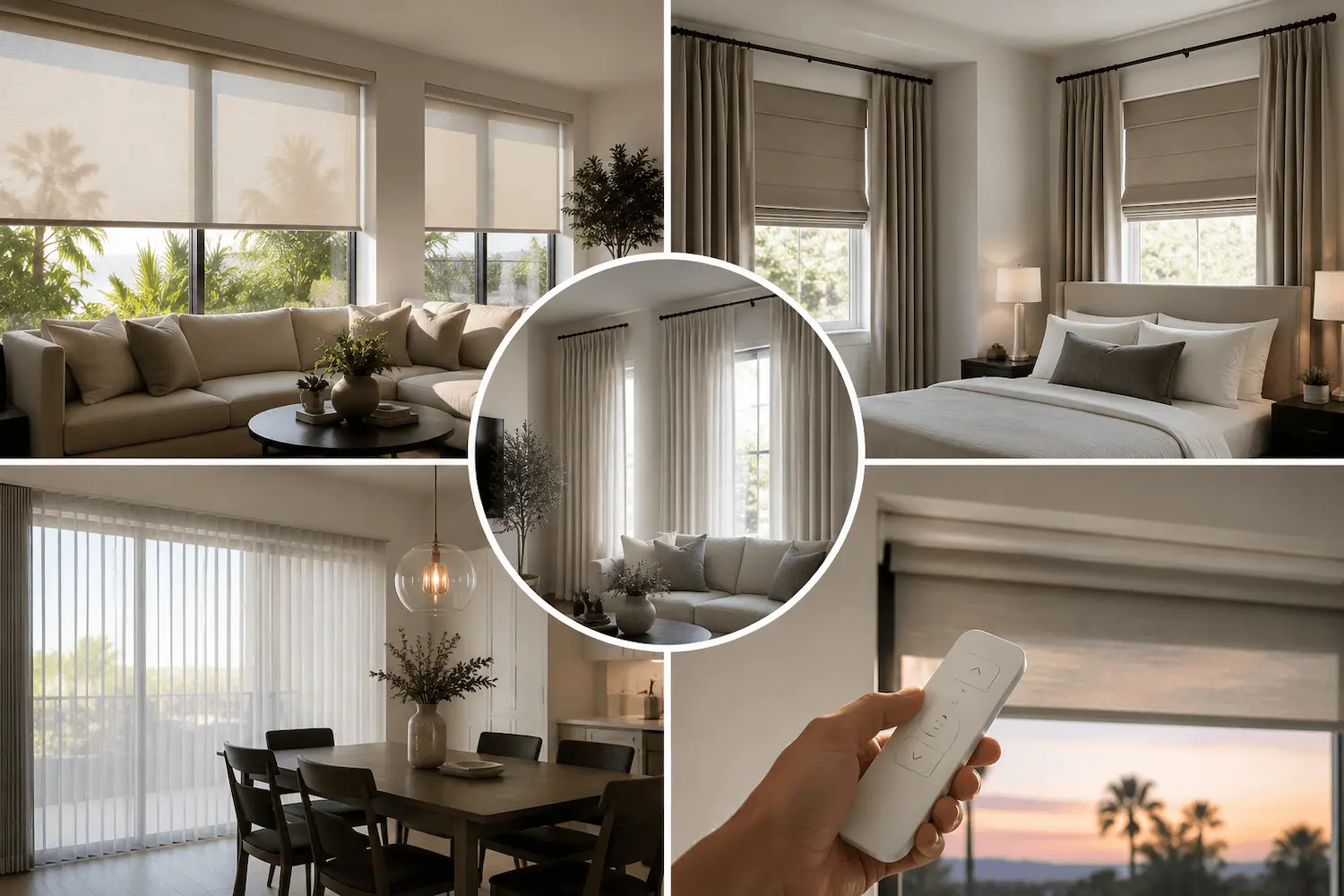
Everything you need to know before investing in custom window treatments for your home.
Introduction
Choosing new window treatments seems simple—until you start looking at the options.
Should you install roller shades or Roman shades? Are curtains still in style? Is motorization worth the investment? What fabric should you choose? Do you really need blackout shades in every bedroom? And perhaps the biggest question of all: how do you know you’re making the right decision for your home?
Most homeowners only replace their window treatments once every 10–15 years. Unlike furniture or décor, window coverings become part of your home’s architecture. They affect how every room looks, how much natural light you enjoy, your privacy, your energy efficiency, and even your home’s resale value.
Unfortunately, many people begin shopping by comparing prices online before understanding what they’re actually buying. They end up selecting products that don’t fit their lifestyle, don’t complement their home’s design, or require replacing much sooner than expected.
The good news is that choosing the right window treatments doesn’t have to be overwhelming.
Whether you’re remodeling a single room, furnishing a newly built home, or upgrading every window throughout your house, this guide will help you understand your options and make confident decisions.
Inside this guide, you’ll learn:
- Which window treatment works best for each room
- The differences between roller shades, Roman shades, curtains, and motorized systems
- How light-filtering and blackout fabrics compare
- Common mistakes homeowners make
- Why professional measurement and installation matter
- How to choose products that look beautiful today and continue performing for years
By the end of this guide, you’ll have a clear understanding of which custom window treatments are best for your home and why investing in professionally designed, custom-made solutions delivers significantly better long-term value than ready-made alternatives.
Why Custom Window Treatments Matter More Than Most Homeowners Realize
Window treatments do much more than cover a window.
They influence nearly every aspect of how a room feels and functions. The right solution can transform an ordinary space into one that feels warmer, brighter, larger, more private, and more luxurious.
The wrong solution, however, can make even an expensive home feel unfinished.
Professional interior designers often consider window treatments one of the final elements that “complete” a room because they visually connect the architecture, furniture, flooring, and natural light into a cohesive design.
Natural Light Control
Southern California homeowners are fortunate to enjoy abundant sunshine throughout the year.
While natural light makes a home feel inviting, excessive sunlight can quickly become uncomfortable.
Properly selected window treatments help you:
- Reduce harsh afternoon glare
- Protect furniture from UV fading
- Maintain comfortable indoor temperatures
- Preserve outdoor views while softening sunlight
- Create a brighter, more balanced interior
Rather than simply blocking sunlight, today’s premium fabrics allow you to control exactly how much light enters your space throughout the day.
Privacy Without Sacrificing Style
Privacy needs vary from room to room.
A living room overlooking a beautiful backyard requires a completely different solution than a bedroom facing the street.
Custom window treatments allow homeowners to balance:
- Privacy
- Natural light
- Outdoor visibility
- Interior aesthetics
Instead of compromising one for another, professionally selected fabrics help achieve both.
Energy Efficiency
Windows are one of the largest sources of heat gain and heat loss in any home.
Quality window treatments help regulate indoor temperatures by reducing solar heat during summer while providing additional insulation during cooler months.
Benefits include:
- Lower cooling costs
- Improved comfort
- Reduced strain on HVAC systems
- Better temperature consistency throughout the home
This becomes especially important in Los Angeles, where large south-facing windows receive significant sunlight throughout the day.
Protecting Interior Finishes
Ultraviolet light slowly damages:
- Hardwood flooring
- Area rugs
- Leather furniture
- Artwork
- Family photographs
- Wood cabinetry
- Upholstery
Many premium shade fabrics filter harmful UV rays while still allowing beautiful natural daylight into the room.
This protection helps preserve expensive interior finishes for many years.
A Better Everyday Living Experience
Window treatments aren’t something you notice only when guests visit.
You interact with them every single day.
You raise them in the morning.
Lower them in the evening.
Adjust them while watching television.
Close them during summer afternoons.
Open them when entertaining.
Because they’re used constantly, quality, durability, and ease of operation become just as important as appearance.
This is one reason motorized window treatments have become increasingly popular—they simplify everyday living while creating a cleaner, more elegant look.
Custom vs. Ready-Made: What’s the Difference?
One of the most common questions homeowners ask is whether custom window treatments are really worth the additional investment.
At first glance, ready-made shades purchased online or from a big-box retailer may appear similar.
In reality, the differences become obvious after installation.
Ready-made products often involve compromises:
- Limited sizes
- Standard colors
- Basic hardware
- Generic fabrics
- Inconsistent operation
- Visible gaps around windows
- Shorter lifespan
They’re designed to fit “most” windows—not your windows.
Custom window treatments are built specifically for your home.
Every detail is tailored to your space:
- Exact measurements
- Fabric selection
- Openness level
- Lift system
- Mounting style
- Decorative hardware
- Control options
- Room function
Instead of forcing your windows to fit a manufactured product, the product is built to fit your windows perfectly.
The result is cleaner lines, smoother operation, improved light control, and a far more refined appearance.
More Than a Product—A Complete Design Solution
Perhaps the biggest misconception is that homeowners are simply purchasing shades or curtains.
In reality, they are investing in an entire process that includes:
- Professional consultation
- Product recommendations
- Accurate measurements
- Custom manufacturing
- Expert installation
- Long-term support
Each step contributes to the final result.
Even the highest-quality shade can perform poorly if measured incorrectly or installed improperly.
Likewise, an average product carefully selected for the right room often performs better than an expensive product chosen without professional guidance.
For this reason, experienced window treatment specialists focus first on understanding how you live in your home before recommending specific products.
Understanding the Different Types of Custom Window Treatments
One of the biggest mistakes homeowners make is assuming that all window treatments serve the same purpose.
They don’t.
Each product category was designed to solve a different problem. Some prioritize clean, modern design. Others focus on softness and elegance. Some maximize light control, while others are built for convenience through automation.
Understanding these differences is the foundation of making the right investment.
Roller Shades: The Modern Favorite
If there is one window treatment that has become the standard for modern homes over the past decade, it is the roller shade.
Its popularity isn’t simply because it looks contemporary—it’s because it works almost everywhere.
A roller shade consists of a single piece of fabric that rolls neatly onto a concealed tube when raised. When lowered, it creates a smooth, uninterrupted surface across the window.
The result is simple, elegant, and timeless.
Unlike older blinds with dozens of slats or bulky mechanisms, roller shades create a clean architectural appearance that complements almost any interior style.
Whether your home is contemporary, transitional, Scandinavian, minimalist, or modern farmhouse, roller shades blend naturally into the design instead of competing with it.
Why homeowners love roller shades
One reason roller shades remain so popular is their versatility.
They can be manufactured in hundreds of fabrics, colors, textures, and openness levels, allowing homeowners to tailor them to each room instead of choosing one solution for the entire house.
Benefits include:
- Clean modern appearance
- Smooth operation
- Minimal visual clutter
- Excellent light control
- Large selection of fabrics
- Easy maintenance
- Compatible with motorization
- Ideal for oversized windows
Another major advantage is that roller shades visually disappear when raised.
Instead of stacking fabric or slats across the window, the fabric rolls into a compact tube, allowing maximum daylight and preserving your outdoor views.
This makes them especially popular in Southern California homes where large windows are often one of the property’s greatest architectural features.
Best rooms for roller shades
Roller shades perform exceptionally well in:
- Living rooms
- Family rooms
- Kitchens
- Dining rooms
- Home offices
- Bedrooms
- Apartments
- Contemporary homes
Because they can be customized with either light-filtering or blackout fabrics, they adapt easily to different functions throughout the home.
For example:
A living room may use a light-filtering fabric that softens afternoon sunlight while preserving outdoor views.
A bedroom can use a blackout fabric that creates a darker sleeping environment.
The overall appearance remains consistent throughout the house while each room functions differently.
Roman Shades: Soft Elegance with Architectural Character
Where roller shades emphasize simplicity, Roman shades introduce warmth, texture, and softness.
Rather than rolling onto a tube, Roman shades fold gracefully into horizontal pleats as they are raised.
These folds create visual depth that adds richness to a room without becoming overly formal.
Roman shades have remained popular for centuries because they bridge the gap between traditional drapery and modern shades.
They provide the tailored appearance of custom fabric while maintaining a relatively compact profile.
Why homeowners choose Roman shades
Roman shades are often selected when homeowners want the window itself to become a decorative feature.
Because the fabric is visible even when fully lowered, texture becomes an important design element.
Natural linens, woven fabrics, subtle patterns, and luxurious textiles all become part of the room’s personality.
Roman shades work especially well when paired with:
- Wood flooring
- Natural stone
- Neutral interiors
- Traditional architecture
- Transitional homes
- Luxury bedrooms
Rather than disappearing into the background, they contribute warmth and visual comfort.
Best rooms for Roman shades
Roman shades are particularly beautiful in:
- Primary bedrooms
- Guest bedrooms
- Dining rooms
- Reading rooms
- Breakfast areas
- Home libraries
They also work beautifully beneath decorative drapery panels, combining softness with additional insulation and light control.
Custom Drapery: Luxury, Scale, and Timeless Design
Many homeowners assume curtains are simply decorative.
Professional interior designers know better.
Custom drapery changes the perceived proportions of a room more than almost any other design element.
Well-designed curtains can make ceilings appear taller.
Windows appear wider.
Rooms feel more luxurious.
Natural light becomes softer.
The entire space feels more complete.
Unlike ready-made curtains purchased from department stores, custom drapery is designed specifically for the architecture of the room.
Every detail is considered:
- Fabric weight
- Pleat style
- Fullness
- Lining
- Length
- Stack-back
- Hardware
- Mounting height
These details may seem small individually, but together they determine whether the finished room feels professionally designed or simply decorated.
Why custom curtains remain popular
Despite the growing popularity of roller shades and motorization, custom curtains continue to play an important role in luxury interiors.
They soften hard architectural lines created by glass, concrete, tile, and stone.
They also improve acoustics by reducing echo in large open spaces.
Many homeowners choose decorative side panels even when roller shades provide the primary light control.
The combination creates a layered look frequently seen in professionally designed homes.
Motorized Window Treatments: The Future of Everyday Living
Perhaps no category has evolved more rapidly than motorized window treatments.
Only a few years ago, motorization was considered a luxury reserved for custom homes.
Today, it has become one of the most requested upgrades among homeowners throughout Los Angeles.
The reason is simple:
People no longer expect technology only in their phones—they expect it throughout their homes.
Motorized shades allow homeowners to raise or lower multiple window coverings with:
- A handheld remote
- A wall switch
- A smartphone app
- Voice assistants
- Automated schedules
- Smart home systems
Instead of adjusting every shade individually, an entire room can transform with a single command.
Everyday advantages of motorization
Convenience is only the beginning.
Motorized systems also:
- Protect privacy automatically at sunset
- Reduce heat gain during the afternoon
- Improve child safety by eliminating cords
- Operate difficult-to-reach windows
- Increase energy efficiency
- Protect furniture from direct sunlight
- Add value to modern homes
Large two-story windows, skylights, and oversized glass walls become dramatically easier to manage.
For many homeowners, once they experience motorization, returning to manual operation feels like stepping backward.
Drapery Hardware: The Detail That Completes the Design
One element that homeowners frequently underestimate is hardware.
Yet hardware serves the same purpose as jewelry does in fashion.
The right finish elevates the entire design.
The wrong finish becomes distracting.
Today’s decorative hardware is available in finishes such as:
- Matte Black
- Brushed Brass
- Satin Nickel
- Oil-Rubbed Bronze
- Polished Chrome
Beyond appearance, quality hardware ensures smooth operation and long-term durability.
For motorized curtain tracks, professional-grade systems also conceal wiring and maintain clean architectural lines.
When selected carefully, hardware blends seamlessly into the overall design instead of drawing unnecessary attention.
Choosing the Right Combination
One important realization surprises many homeowners during a consultation:
You don’t have to choose only one product.
In fact, the most beautiful homes often combine several window treatment types.
For example:
- Roller shades throughout the home for consistency
- Decorative drapery in living and dining areas
- Roman shades in bedrooms
- Motorization for large or hard-to-reach windows
- Blackout fabrics where complete darkness is important
- Light-filtering fabrics in shared living spaces
This layered approach provides the ideal balance of beauty, functionality, and long-term flexibility.
Rather than forcing every room to use the same solution, each space receives the treatment that best supports how it is actually used.
Choosing the Right Window Treatments for Every Room
One of the biggest misconceptions about window treatments is that the same product should be used throughout an entire home.
While maintaining a consistent design language is important, every room serves a different purpose. The amount of sunlight, privacy requirements, daily activities, and even the direction each window faces all influence which solution will perform best.
Professional designers don’t begin by asking, “Which shade do you like?”
Instead, they ask:
- How do you use this room?
- What time of day do you spend here?
- Is privacy important?
- Do you watch television here?
- Do you wake up with the sunrise?
- Are there children?
- Is the room exposed to harsh afternoon sunlight?
The answers determine which window treatment will provide the best long-term experience.
Living Room
The living room is usually the most public and multifunctional space in a home.
It may be used for:
- Entertaining guests
- Watching television
- Reading
- Relaxing
- Family gatherings
- Enjoying outdoor views
Because of these multiple uses, flexibility is more important than complete darkness.
Recommended Solution
For most Southern California homes:
Light-Filtering Roller Shades provide the ideal balance.
They:
- Soften bright sunlight
- Reduce glare
- Protect furniture from UV damage
- Preserve daytime views
- Maintain an open, modern appearance
If the room has high ceilings or expansive windows, decorative drapery panels can be added to create warmth and architectural scale.
This combination is one of the most common solutions used by interior designers because it offers both functionality and elegance.
Family Room & Media Room
Media rooms introduce a different challenge.
Television screens become difficult to view when direct sunlight creates glare.
Here, homeowners often benefit from slightly denser fabrics.
Depending on how the room is used, either:
- Light-filtering fabrics with lower openness
- Room-darkening fabrics
- Blackout shades
May be appropriate.
Motorization is especially valuable because it allows lighting conditions to change instantly before movie nights or sporting events.
Kitchen
The kitchen is one of the most demanding environments for window treatments.
Products must withstand:
- Heat
- Humidity
- Cooking residue
- Frequent use
- Daily cleaning
Heavy fabric drapery is rarely the best choice.
Instead, roller shades remain one of the easiest products to maintain.
Their smooth surfaces collect less dust and are easier to clean than pleated fabrics.
Light-filtering fabrics are usually preferred because kitchens benefit from abundant natural daylight throughout the day.
Dining Room
Dining rooms generally benefit from a softer atmosphere.
Here, aesthetics often become just as important as functionality.
Many homeowners choose:
- Roman Shades
- Decorative Drapery
- Layered Treatments
These options introduce texture and create a more refined environment for entertaining.
Natural woven fabrics and subtle linen textures work particularly well in dining spaces because they complement wood furniture and warm lighting.
Home Office
Working from home has changed the way many homeowners think about window treatments.
The goal is no longer simply controlling sunlight.
Instead, homeowners must manage:
- Computer screen glare
- Video conference lighting
- Privacy
- Comfortable daylight throughout the workday
For most offices, light-filtering roller shades provide the best solution.
They diffuse harsh sunlight while allowing enough natural light to reduce eye fatigue.
If your office receives intense afternoon sun, selecting a slightly denser fabric can improve comfort without making the room feel dark.
Primary Bedroom
Bedrooms have different priorities than living spaces.
Sleep quality depends heavily on controlling light.
Even small amounts of early morning sunlight can interrupt sleep.
For this reason, bedrooms often benefit from:
- Blackout Roller Shades
- Blackout Roman Shades
- Layered Drapery
- Motorized Blackout Systems
Many homeowners initially believe blackout fabrics will make their bedrooms feel heavy or dark during the day.
Fortunately, blackout refers to the fabric—not how it must always be used.
During the day, the shades can be fully raised to maximize natural light.
At night, they provide the darkness needed for restful sleep.
Children’s Bedrooms
Safety becomes the highest priority.
Today’s professionally installed window treatments eliminate exposed operating cords that may present hazards for young children.
Motorized shades have become particularly popular for children’s rooms because they combine:
- Convenience
- Safety
- Quiet operation
- Better sleep routines
Parents can even automate bedtime schedules so shades lower automatically each evening.
Guest Rooms
Guest rooms don’t require the same level of daily functionality as primary bedrooms.
Many homeowners choose products that balance:
- Comfort
- Easy operation
- Attractive appearance
Roman shades paired with decorative drapery create a welcoming hotel-like atmosphere while remaining practical for occasional use.
Bathrooms
Bathrooms require privacy without sacrificing natural light.
Moisture-resistant materials become especially important.
Depending on window size and location:
- Roller Shades
- Privacy Fabrics
- Frosted Light-Filtering Fabrics
often provide the best combination of durability and privacy.
Large Sliding Doors
Oversized glass doors have become increasingly common in modern California homes.
These openings require special consideration.
Rather than treating them like ordinary windows, professionals evaluate:
- Width
- Daily traffic patterns
- Furniture placement
- Outdoor views
- Motorization opportunities
Large roller shades with motorized operation have become one of the most elegant solutions because they maintain clean sightlines while operating smoothly across expansive openings.
Light-Filtering vs. Blackout: Which Is Better?
This question is asked during nearly every consultation.
The answer is simple:
Neither is universally better.
They solve different problems.
Light-Filtering Fabrics
Light-filtering fabrics allow daylight to enter while softening its intensity.
Benefits include:
- Reduced glare
- Comfortable daylight
- Preserved privacy during daytime
- Better connection to outdoor views
- Brighter interiors
These fabrics are ideal for:
- Living rooms
- Kitchens
- Dining rooms
- Home offices
Blackout Fabrics
Blackout fabrics are designed to block nearly all incoming light.
Benefits include:
- Improved sleep
- Better movie viewing
- Enhanced privacy
- Reduced solar heat
- Protection from intense morning sunlight
Best suited for:
- Bedrooms
- Nurseries
- Media rooms
Can You Mix Both?
Absolutely.
In fact, most professionally designed homes do exactly that.
Rather than choosing one fabric for every room, homeowners select products based on how each space functions.
This creates a home that is not only beautiful but also far more comfortable to live in every day.
Is Motorization Worth the Investment?
Ten years ago, this question had a different answer.
Today, the answer is often yes.
Not because motorization is fashionable—
—but because it genuinely improves daily living.
Homeowners quickly discover that they use their shades more frequently when operation requires nothing more than pressing a button or speaking a voice command.
That means:
- Better privacy
- Better energy efficiency
- Better protection from sunlight
- Greater comfort
Automation also helps protect expensive flooring, artwork, and furniture by lowering shades automatically during the brightest hours of the day—even when nobody is home.
For large homes with dozens of windows, this convenience becomes invaluable.
More importantly, motorization is no longer reserved for luxury estates.
Advances in technology have made smart window treatments increasingly accessible, and many homeowners find that the long-term convenience justifies the additional investment.
Common Mistakes Homeowners Make When Choosing Window Treatments
After helping hundreds of homeowners transform their spaces, one thing becomes very clear:
Very few people regret investing in quality custom window treatments.
However, many people regret how they made their decision.
Most costly mistakes happen long before installation. They happen during the planning stage.
Understanding these common pitfalls can save you money, frustration, and the disappointment of replacing window treatments years earlier than expected.
Mistake #1: Choosing Based Only on Price
It’s natural to compare prices.
Everyone wants good value.
But window treatments are one of those products where price alone tells you very little.
Two roller shades may appear almost identical online, yet differ dramatically in:
- Fabric quality
- UV protection
- Operating system
- Hardware durability
- Motor reliability
- Warranty
- Customization options
- Installation quality
The least expensive option often becomes the most expensive once replacement, repairs, or poor performance are considered.
Instead of asking:
“What’s the cheapest option?”
Ask:
“Which option will still perform beautifully ten years from now?”
Mistake #2: Measuring Windows Yourself
This is probably the most expensive mistake homeowners make.
A difference of even 1/8 inch (3 mm) can affect:
- Light gaps
- Smooth operation
- Appearance
- Safety
- Overall fit
Professional installers don’t simply measure width and height.
They evaluate:
- Window depth
- Mounting surfaces
- Frame condition
- Out-of-square openings
- Obstructions
- Trim details
- Clearance requirements
Many windows that appear perfectly rectangular are actually slightly uneven.
Custom manufacturing accounts for these small variations.
Incorrect measurements do not.
Mistake #3: Ignoring Sun Exposure
Not every window receives the same amount of sunlight.
A west-facing living room in Los Angeles experiences dramatically different conditions than a north-facing bedroom.
Without considering window orientation, homeowners often choose fabrics that:
- Allow too much glare
- Fade prematurely
- Create uncomfortable indoor temperatures
Professionals evaluate how sunlight moves through your home throughout the day before recommending fabric openness and color.
Mistake #4: Thinking Every Room Needs the Same Product
Consistency is important.
Uniformity is not.
A home where every window receives the exact same treatment often sacrifices comfort for simplicity.
Instead, professionals create a coordinated design language while selecting products based on each room’s function.
For example:
- Roller shades throughout common areas
- Blackout shades in bedrooms
- Decorative drapery in entertaining spaces
- Motorized systems for large windows
The home feels cohesive, yet every room performs exactly as it should.
Mistake #5: Forgetting About Furniture Placement
Window treatments don’t exist in isolation.
Furniture affects how they operate.
Consider:
- A sofa beneath a window
- A dining table blocking access
- Kitchen counters
- Bathtubs
- Built-in cabinetry
These details influence:
- Mounting height
- Shade operation
- Motor placement
- Control locations
Planning around furniture creates a far better everyday experience.
Mistake #6: Underestimating Motorization
Many homeowners initially think:
“I don’t need motorized shades.”
Then they move into the home.
Six months later they discover:
- They rarely adjust hard-to-reach windows.
- Large shades are heavy.
- Afternoon sunlight overheats certain rooms.
- Privacy becomes inconvenient.
Motorization isn’t simply about luxury.
It’s about encouraging homeowners to actually use their window treatments every day.
Mistake #7: Treating Window Treatments as an Afterthought
Many remodeling projects spend months selecting:
- Flooring
- Cabinets
- Countertops
- Lighting
- Furniture
Then window treatments become the final decision made in a hurry.
Ironically, windows occupy some of the largest visual surfaces in the home.
Thoughtfully selected treatments tie together every other design choice.
Why Professional Measurement and Installation Matter
Homeowners often focus entirely on choosing the right product.
Professionals focus on the entire process.
The final result depends on much more than the shade itself.
It depends on:
- Consultation
- Product selection
- Precise measurements
- Manufacturing
- Installation
- Final adjustments
Each stage builds upon the previous one.
Skipping any of them increases the likelihood of problems later.
Professional Consultation
An experienced consultant helps homeowners navigate hundreds of possible combinations.
Rather than selling one product, they identify solutions based on:
- Lifestyle
- Architecture
- Privacy needs
- Budget
- Sun exposure
- Long-term goals
This guidance often prevents expensive mistakes before they happen.
Precision Measurement
Professional measurements ensure:
- Cleaner appearance
- Better light control
- Proper operation
- Longer product life
Custom products are manufactured specifically for your windows—not generic dimensions.
That precision is only possible when measurements are equally precise.
Expert Installation
Even the highest-quality product can perform poorly if installed incorrectly.
Professional installation ensures:
- Perfect alignment
- Secure mounting
- Smooth operation
- Correct motor programming
- Proper safety clearances
- Manufacturer warranty compliance
More importantly, homeowners gain confidence knowing everything has been installed exactly as intended.
Frequently Asked Questions
How long do custom window treatments typically last?
High-quality custom window treatments commonly last 10 to 20 years, depending on the product, fabric, operating system, and maintenance. Professionally manufactured and installed systems generally outperform ready-made alternatives in both durability and appearance.
Are motorized shades difficult to use?
Not at all.
Most systems operate using:
- Remote controls
- Smartphone apps
- Wall switches
- Voice assistants
- Automated schedules
Many homeowners find them easier to use than manual shades after only a few days.
Should every room use blackout shades?
No.
Blackout fabrics are ideal for bedrooms and media rooms.
Living spaces usually benefit from light-filtering fabrics that preserve natural daylight while reducing glare.
Are custom window treatments worth the investment?
For homeowners planning to remain in their homes for several years, custom window treatments often provide significantly better long-term value through improved durability, appearance, energy efficiency, and everyday comfort.
Can roller shades and curtains be combined?
Absolutely.
Layering roller shades with decorative drapery is one of the most popular design approaches because it combines clean functionality with softness and visual depth.
Final Thoughts
Choosing custom window treatments is about much more than selecting a fabric or color.
It’s about creating a home that feels comfortable every day, functions beautifully in every season, and reflects your personal style.
The best solution isn’t necessarily the most expensive product.
It’s the product that’s thoughtfully selected for the way you live.
Every home is unique.
Every window is different.
And every family has its own priorities.
That’s why professional consultation remains one of the most valuable parts of the process.
When window treatments are carefully planned, accurately measured, custom manufactured, and professionally installed, the result is something that enhances your home for years—not just visually, but in the way you experience your space every single day.
Ready to Transform Your Home?
Whether you’re updating a single room or furnishing an entire home, choosing the right window treatments begins with expert guidance.
At RomRoll Shade, we help homeowners throughout Los Angeles and the surrounding communities select custom solutions that balance style, comfort, functionality, and long-term value.
From modern roller shades and elegant Roman shades to custom drapery, motorized window treatments, and professional installation, our team works with you from consultation through final installation to ensure every window is tailored to your home.
Schedule your free consultation and measurement today, and let us help you create window treatments that you’ll enjoy for years to come.