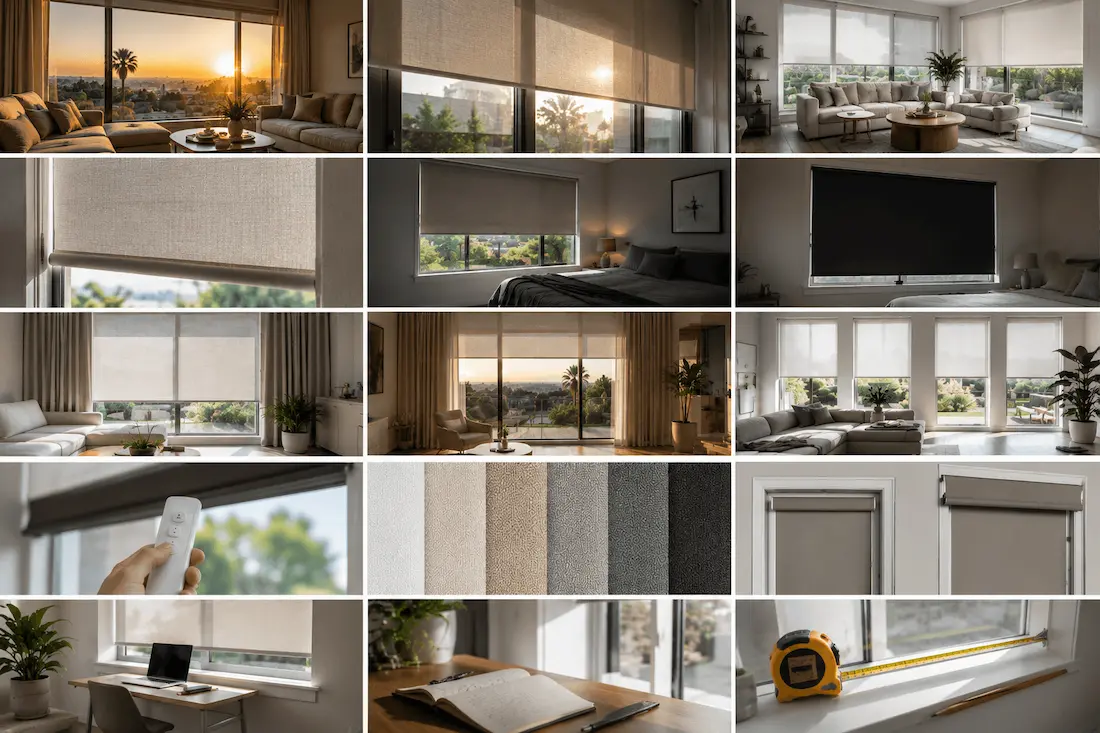
West-facing windows can fill a Los Angeles home with beautiful natural light, but they can also create some of the most difficult indoor comfort problems. As the sun moves lower in the afternoon, direct sunlight may cause intense glare, increase the temperature near the windows, fade furnishings, and make living rooms, bedrooms, and home offices uncomfortable.
The right window treatment should do more than simply cover the glass. It should help manage afternoon sunlight while supporting the way you use the room. Some homeowners want to reduce glare without losing their view. Others need stronger room darkening, better nighttime privacy, or an easier way to operate several large windows.
For many west-facing windows, the best solution is a custom roller shade selected with the appropriate fabric, color, openness, mounting style, and control system. In other rooms, blackout shades or a combination of shades and custom drapery may be more effective.
This guide explains the most practical window treatment options for west-facing homes in Los Angeles and how to choose the right solution for each space.
Why West-Facing Windows Can Be Difficult to Cover
West-facing windows typically receive their strongest direct sunlight during the afternoon and early evening. This can be especially noticeable in Southern California homes with large windows, sliding glass doors, open floor plans, or limited exterior shade.
Common problems include:
- Strong glare on televisions, monitors, and reflective surfaces
- Increased heat near windows during the afternoon
- Fading of flooring, furniture, artwork, and upholstery
- Reduced comfort in bedrooms, living rooms, and home offices
- A lack of privacy after sunset
- Difficulty covering wide or hard-to-reach windows
The ideal solution depends on more than the direction of the window. The size of the glass, the room’s purpose, nearby buildings, exterior overhangs, desired privacy, and whether you want to preserve the view all affect the final recommendation.
That is why two west-facing windows in different Los Angeles homes may require completely different fabrics or mounting methods.
Custom Roller Shades: The Best Overall Starting Point
For many west-facing windows, custom roller shades provide the best balance of light control, clean design, flexibility, and everyday convenience.
Roller shades work particularly well in modern and transitional Los Angeles interiors because they have a simple profile and do not add unnecessary visual weight around the window. They can be customized for small windows, wide openings, large glass doors, and groups of windows that need a coordinated appearance.
Depending on the fabric selected, roller shades can:
- Soften direct sunlight
- Reduce distracting glare
- Preserve part of the exterior view
- Improve daytime privacy
- Darken a bedroom or media room
- Coordinate with existing furniture and finishes
- Operate manually or through a motorized system
However, the term “roller shade” describes the operating style, not one specific level of light control. A light-filtering roller shade and a blackout roller shade can perform very differently. Choosing the correct fabric is therefore just as important as choosing the shade itself.
Solar-Style and Light-Filtering Fabrics for Glare Control
Homeowners who want to reduce glare while retaining natural light should consider solar-style or light-filtering roller shades.
These fabrics are designed to soften incoming light instead of fully blocking it. They can be an effective choice for west-facing living rooms, dining rooms, kitchens, and home offices where complete darkness is unnecessary.
Depending on the fabric construction, light-filtering or solar-style shades may help:
- Reduce harsh afternoon brightness
- Make screens and televisions easier to view
- Maintain a brighter interior
- Preserve varying degrees of outward visibility
- Create daytime privacy
- Give the window a clean, finished appearance
Understanding Fabric Openness
Some solar-style fabrics are described by their openness factor. In general, a more open fabric provides a clearer view through the shade but allows more light to pass through. A tighter fabric offers stronger glare control and greater daytime coverage but reduces the exterior view.
There is no single openness level that works for every west-facing window. The appropriate choice depends on:
- How intense the direct sunlight is
- Whether preserving the view is a priority
- The distance between your home and neighboring properties
- The room’s use
- The fabric color
- The size and orientation of the glass
Samples should ideally be viewed against the actual window during the time of day when the sunlight is strongest. A fabric that looks suitable in a showroom or under indoor lighting may appear very different in direct afternoon sun.
Daytime Privacy Is Not the Same as Nighttime Privacy
Light-filtering and solar-style shades may provide useful privacy during the day, particularly when the exterior is brighter than the interior. That relationship changes after sunset.
When lights are on inside the home and it is dark outside, visibility from outside can increase. Homeowners who need strong nighttime privacy may need a tighter fabric, a blackout shade, or a layered treatment that includes drapery.
When Blackout Roller Shades Are the Better Choice
For bedrooms, nurseries, media rooms, and other spaces where room darkening and privacy are more important than maintaining the view, custom blackout roller shades may be the better option.
Blackout fabrics are designed to prevent light from passing through the material itself. They are particularly useful when direct afternoon sunlight enters a bedroom before bedtime or creates reflections in a media room.
Blackout roller shades can provide:
- Stronger room darkening
- Greater privacy
- Reduced glare
- A more controlled sleeping environment
- Better coverage for rooms where maintaining the view is not essential
It is important to understand that blackout fabric does not automatically guarantee a completely light-free room. Small amounts of light may still enter around the sides, top, or bottom of the shade, especially with an inside-mounted installation.
For homeowners seeking the strongest possible room darkening, an outside mount, additional side coverage, or a layered treatment may be recommended after the window is measured.
Solar Shades vs. Blackout Shades
Choosing between a solar-style shade and a blackout shade depends on what you want the room to do.
Priority | Recommended Starting Point |
|---|---|
Preserve the exterior view | Solar-style or open-weave roller shade |
Reduce glare without darkening the room | Light-filtering roller shade |
Create stronger bedroom privacy | Blackout roller shade |
Darken a media room | Blackout roller shade |
Maintain natural light | Light-filtering fabric |
Control both daytime glare and nighttime privacy | Layered shade and drapery |
A solar-style shade is not automatically better because it preserves the view, and a blackout shade is not automatically better because it blocks more light. The right choice is the one that matches the function of the room.
Layering Roller Shades with Custom Drapery
For homeowners who want more control throughout the day, combining a roller shade with custom drapery and curtains can create a highly flexible solution.
The roller shade can manage glare and sunlight during the afternoon, while the drapery can add stronger privacy, softness, and visual depth in the evening. This approach works especially well in primary bedrooms, formal living rooms, dining rooms, and large spaces where the window treatment is also an important design feature.
Layered window treatments may provide:
- Adjustable light control
- Improved nighttime privacy
- Better coverage around the edges of the window
- A more finished and decorative appearance
- Greater flexibility between daytime and evening use
- Coordination with furniture, rugs, upholstery, and architectural details
For example, a homeowner may use a light-filtering roller shade during the day to reduce glare while preserving some outdoor visibility. In the evening, the drapery can be closed to create greater privacy and a softer atmosphere.
Layering is also helpful when one fabric alone cannot satisfy every requirement.
Motorized Shades for Large or Hard-to-Reach Windows
West-facing windows are often covered during the same part of the day. When a home has several large windows, high windows, or glass doors behind furniture, manually adjusting every shade can become inconvenient.
Motorized window treatments make it easier to operate one shade or a group of shades without reaching for cords or walking from window to window.
Motorization may be especially useful for:
- Floor-to-ceiling windows
- Wide window walls
- Multiple shades installed in one room
- High or difficult-to-reach windows
- Windows located behind sofas or other furniture
- Homeowners who want consistent daily light control
- Rooms where several shades should remain aligned
Depending on the selected system, shades may be operated through a remote, wall control, app, or compatible home automation setup. Available control options should be confirmed when the motor and shade system are selected.
Motorization is not only a convenience feature. It can make it more likely that shades are adjusted consistently before the strongest afternoon sunlight reaches the room.
Choosing Between Light and Dark Shade Fabrics
Fabric color affects more than the visual style of a room. It can also influence glare, outward visibility, and the way the shade appears against the window.
Lighter Fabrics
Light-colored fabrics often create a softer, brighter appearance and may coordinate well with ivory, beige, white, and warm neutral interiors. They can feel less visually prominent when the shade is lowered.
Depending on the material, a lighter fabric may also reflect more visible light. However, it may produce a brighter surface at the window and can make the exterior view appear less defined.
Darker Fabrics
Darker solar-style fabrics often provide a clearer outward view because the eye focuses through the darker material more easily. They can also create a strong architectural appearance in contemporary interiors.
However, a dark fabric may absorb and visually emphasize sunlight differently than a lighter option. The performance of the fabric cannot be judged by color alone.
The weave, openness, backing, material, glass conditions, and installation style should all be considered. The most reliable approach is to compare physical samples at the actual window.
Inside Mount or Outside Mount?
The mounting method can significantly affect the appearance and performance of a window shade.
Inside-Mounted Shades
An inside-mounted shade is installed within the window opening.
Advantages may include:
- A clean and integrated appearance
- Visible window trim
- A minimal profile
- Space for drapery outside the opening
However, the window must have sufficient depth, and careful measurement is essential. Because the fabric is usually narrower than the complete window opening, small light gaps may remain along the sides.
Outside-Mounted Shades
An outside-mounted shade is installed above or beyond the window opening.
Advantages may include:
- Greater coverage around the window
- Reduced visibility of side light gaps
- More flexibility for shallow window frames
- The ability to make the window appear taller or wider
- Stronger coverage for room-darkening applications
Outside mounts may be preferable for some blackout installations or windows where reducing edge light is a priority.
Neither mounting style is universally superior. The correct choice depends on the construction of the window, the desired appearance, surrounding trim, nearby hardware, and how much light control is required.
Best West-Facing Window Treatments by Room
Different rooms require different levels of light, privacy, and visibility.
Room | Recommended Starting Point |
|---|---|
Living Room | Light-filtering or solar-style roller shade |
Bedroom | Blackout roller shade or shade layered with drapery |
Home Office | Glare-reducing roller shade |
Media Room | Blackout roller shade |
Dining Room | Light-filtering shade with optional drapery |
Kitchen | Easy-to-operate light-filtering roller shade |
Nursery | Blackout or room-darkening shade |
Large Glass Door | Custom roller shade or motorized shade |
High Window | Motorized roller shade |
These recommendations are starting points rather than fixed rules. A west-facing living room facing a neighboring building may need more privacy than one overlooking an open yard. Similarly, a bedroom with exterior trees or an architectural overhang may not require the same fabric as a bedroom receiving uninterrupted direct sunlight.
What to Consider Before Selecting a Shade
Before choosing a treatment for a west-facing window, consider the following questions.
How Strong Is the Afternoon Sun?
Observe the window during the hottest and brightest part of the day. Note when direct light begins, how long it lasts, and which areas of the room it reaches.
Do You Want to Preserve the View?
A more open fabric may be appropriate when the exterior view is important. If privacy or darkness matters more, a tighter or blackout fabric may be preferable.
How Much Privacy Do You Need?
Think about both daytime and nighttime conditions. A fabric that provides adequate coverage during the day may not offer the same privacy when interior lights are on at night.
What Is the Room Used For?
A home office requires glare control. A bedroom may require room darkening. A living room may need a combination of view preservation, comfort, and visual appeal.
Is the Window Large or Difficult to Reach?
Large, tall, or obstructed windows may benefit from motorization. Very wide openings may also require more than one shade to achieve reliable operation and a balanced appearance.
Will the Shade Be Used with Drapery?
The shade, drapery, mounting hardware, stack-back area, and surrounding furniture should be planned together. Coordinating these components early can create a cleaner installation.
Is an Inside or Outside Mount More Appropriate?
Window depth, trim, handles, frame shape, and desired edge coverage all affect the mounting decision.
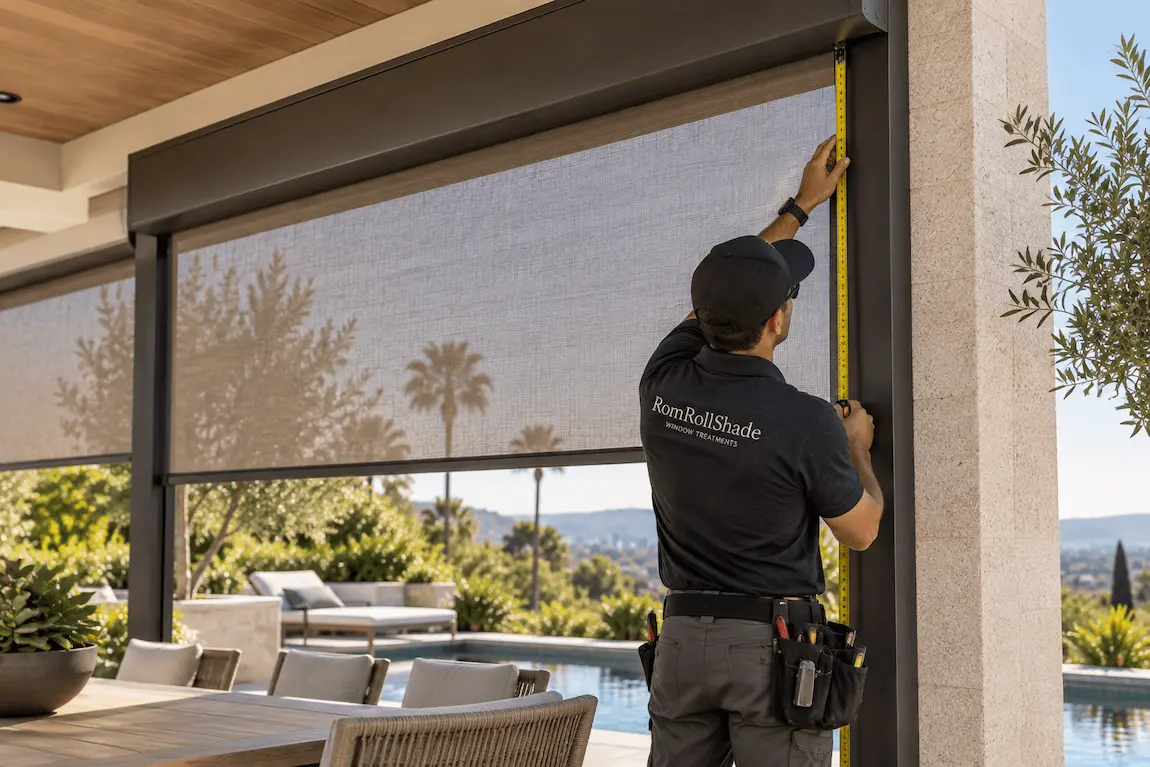
Why Professional Measurement Matters
Accurate measurement is essential for any custom shade, but it becomes particularly important when the goal is to control strong afternoon sunlight.
Even small measurement errors can affect:
- Side coverage
- Fabric alignment
- Mounting clearance
- Light gaps
- Shade operation
- Motor placement
- The alignment of multiple shades
- Compatibility with existing drapery or hardware
Windows may also appear square while having slight variations between the top, middle, and bottom of the opening. Large window groups, sliding doors, and motorized installations require additional planning to ensure that the final treatment operates correctly and looks balanced.
During a professional window treatment consultation, the window can be evaluated in its actual environment. This makes it possible to consider the sunlight, privacy, room layout, mounting conditions, fabric samples, and operating preferences together rather than selecting a treatment based only on an online image.
Choosing the Right Solution for Your Los Angeles Home
The best window treatment for a west-facing window depends on what you want to preserve and what you need to control.
A solar-style or light-filtering roller shade may be the right choice when you want to reduce glare while maintaining natural light and some exterior visibility. A blackout roller shade may be more appropriate for bedrooms, nurseries, and media rooms. Layering a shade with custom drapery can provide greater flexibility, while motorization can make large or hard-to-reach windows easier to manage every day.
RomRollShade designs, measures, and installs custom window treatments for homes throughout the San Fernando Valley and West Los Angeles. Each recommendation is based on the actual window, room, sunlight, privacy requirements, and design goals.
To discuss the best treatment for your west-facing windows, call (818) 216-4210 or contact RomRollShade to request a consultation.