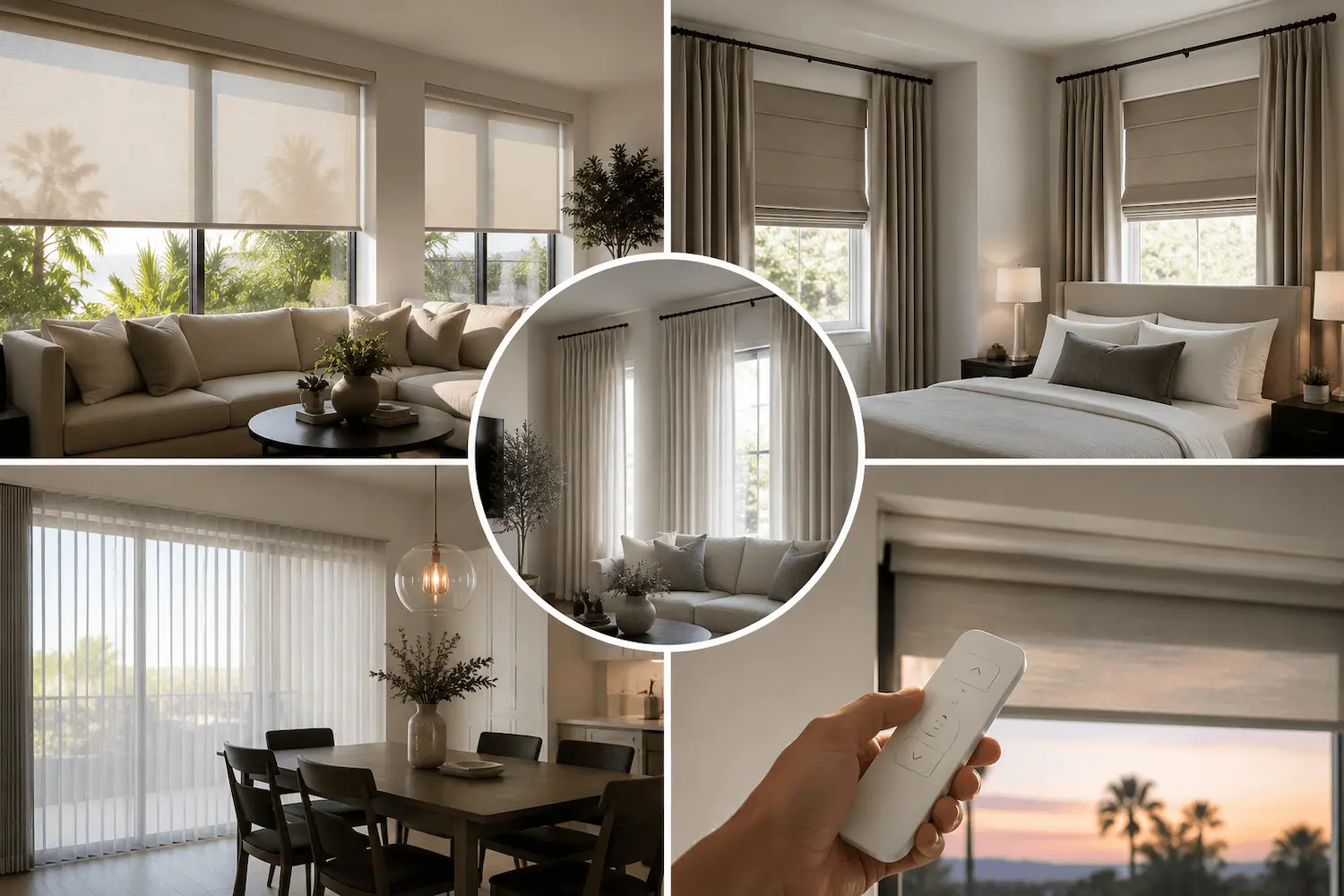
Choosing window treatments in Los Angeles is not just about picking something that looks good in a photo. The light here is strong. Rooms can heat up quickly. Privacy changes from one neighborhood, street, or hillside view to the next. A window that feels beautiful in the morning can feel too bright by mid-afternoon, and a treatment that works in a bedroom may not make sense in a kitchen, office, or sliding glass door.
That is why custom window treatments are different from buying a ready-made shade or curtain panel. The right choice depends on the room, the window size, the direction of the sun, how much privacy you need, and how you use the space every day.
For homeowners searching for custom window treatments in Los Angeles, the main question is usually simple: should I choose shades, drapery, blinds, or a layered treatment? The best answer depends on the room.
Below is a practical room-by-room guide to help you compare the options before scheduling a consultation or measurement.
How LA Light, Heat, and Privacy Change the Decision
Los Angeles homes deal with a very specific mix of conditions: bright daylight, warm afternoons, large windows, indoor-outdoor layouts, and neighbors that may be closer than they look. A window treatment needs to respond to all of that.
In many LA homes, the biggest issue is glare. Living rooms, home offices, and kitchens often get direct sun at certain hours, making screens hard to see and making the room less comfortable. In those spaces, roller shades, solar shades, or light-filtering shades often work well because they soften the light without making the room feel closed off.
Bedrooms have a different problem. A little filtered daylight may be fine during the day, but at night or early morning, privacy and room darkening matter more. That is where blackout roller shades, lined drapery, or layered drapery and shades can make a big difference.
Privacy also changes by area. A home in Sherman Oaks or Encino may need different coverage than a condo in West LA, a hillside property, or a street-facing room in Studio City. Some windows need daytime privacy only. Others need full evening privacy once the lights are on inside.
This is where made to measure window treatments become important. The product is only part of the result. The fit, mount type, fabric opacity, hardware, and installation all affect how the window treatment performs.
Best Options by Room: Living Room, Bedroom, Kitchen, and Office
Every room asks for something different from a window treatment. The best solution is usually the one that supports how the room is actually used.
Living rooms
Living rooms often have the largest windows in the home. They may face the street, a backyard, a patio, or a view. The goal is usually a balance of daylight, comfort, privacy, and style.
For a clean modern look, roller shades are a strong choice. Light-filtering roller shades soften the room and reduce glare while keeping the space bright. Solar shades can also help when the main concern is glare and heat from strong sun exposure.
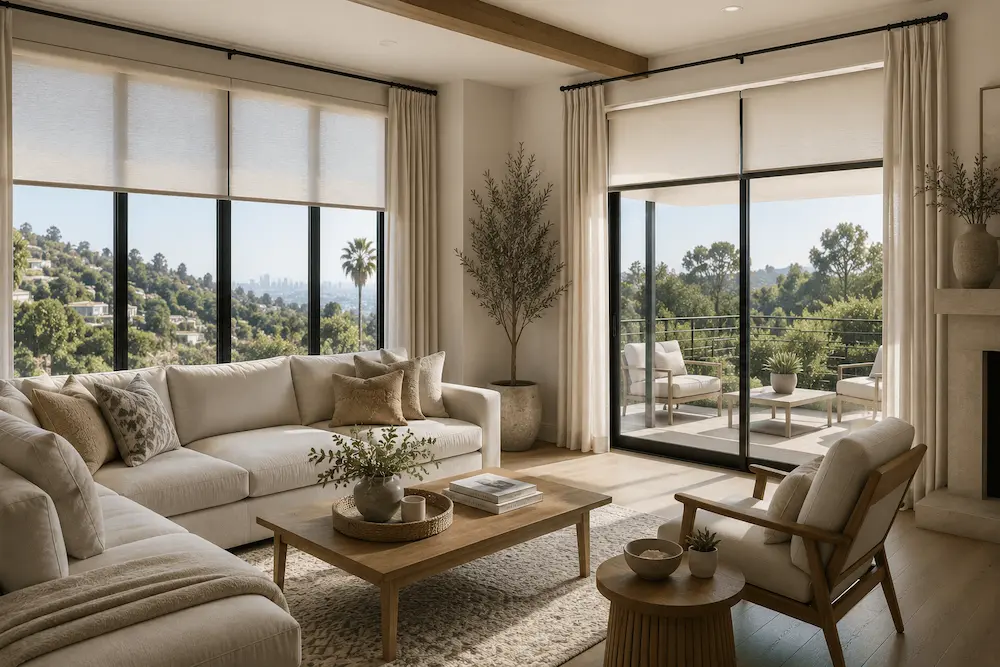
For a softer, more finished room, custom drapery works beautifully. Drapery adds warmth, fabric movement, and a more designed look. In many Los Angeles homes, the best living room solution is layered: roller shades for daily light control, with drapery panels to frame the windows and complete the room.
Layering is especially helpful for large sliding doors, wide window walls, and rooms where the window treatment is part of the interior design.
Bedrooms
Bedrooms need privacy and better control over morning light. For many homeowners, this is where blackout options become worth the investment.
Blackout roller shades are clean, simple, and effective for room darkening. They work well in bedrooms, nurseries, guest rooms, and media rooms. If the room needs a softer look, lined drapery can add both privacy and a more elevated finish.
A layered bedroom treatment can be very effective: a blackout shade for function, with drapery for softness and style. This gives the room a more complete look and improves flexibility. During the day, the shade can be raised or adjusted. At night, both layers can help the room feel more private and restful.
For tall or hard-to-reach windows, motorized shades or motorized curtain tracks can also be worth considering.
Kitchens
Kitchens need practical window treatments. Fabric drapery is not always the best fit near cooking areas, sinks, or high-use surfaces. In many kitchens, roller shades, light-filtering shades, woven-style looks, or blinds are easier to live with.
The best kitchen window treatment usually depends on the window location. A window over a sink may need a simple shade that stays clean and operates easily. A breakfast nook or open kitchen with a larger window may allow for a softer shade or Roman shade.
For kitchens that get strong sun, light-filtering roller shades are often a good option because they reduce harsh light without making the space dark.
Home offices
Home offices have become one of the most important rooms for window treatment planning. The main issue is usually screen glare. A window that looks beautiful may still make it hard to work during certain hours.
Roller shades, solar shades, and blinds can all work well in an office. Roller shades give a clean, simple appearance. Blinds allow adjustable privacy and directional light control. Solar fabrics can help reduce glare while preserving some brightness.
If you are searching for window treatments near me because your home office is uncomfortable during the day, it helps to think first about the direction of the window and the time of day the glare is worst. That will guide the fabric and opacity choice.
When to Choose Shades, Drapery, Blinds, or Layered Treatments
There is no single best window treatment for every Los Angeles home. The right product depends on the goal.
Choose shades when you want clean lines and practical light control
Shades are a good choice when the room needs a simple, modern profile. Roller shades are especially popular because they disappear visually when raised and look clean when lowered. They can be light-filtering, blackout, manual, or motorized.
Shades work well for living rooms, bedrooms, kitchens, offices, sliding doors, and large windows. They are also a good option when you want consistent coverage across several windows.
Choose drapery when the room needs softness and a finished look
Custom drapery is ideal when the window treatment needs to contribute to the design of the room. Drapery adds texture, warmth, and visual height. It can make a room feel more complete, especially around large windows, dining rooms, bedrooms, and living rooms.
Drapery also allows more design choices: fabric, lining, fullness, pleat style, hardware, and length. The result can feel casual, tailored, dramatic, or minimal depending on the choices.
Choose blinds when you need adjustable privacy
Blinds are practical when you want to tilt the slats during the day instead of fully opening or closing the treatment. They are useful for offices, bedrooms, bathrooms, and rooms where privacy changes throughout the day.
Faux wood blinds, wood blinds, and other slatted treatments can work well when the goal is easy adjustment and a more traditional window profile.
Choose layered treatments when one product is not enough
Many rooms need more than one function. A living room may need glare control during the day and a softer finished look at night. A bedroom may need blackout performance but still benefit from drapery. A dining room may need privacy and a more decorative frame.
Layered window treatments solve that problem. Common combinations include:
Roller shades with drapery panels
Blackout shades with decorative drapery
Sheer drapery with lined panels
Shades with motorized curtain tracks
Blinds with stationary drapery panels
Layering is also useful when the architecture of the room needs a more considered finish.
How Local Measurement and Installation Change the Final Result
The difference between an average window treatment and a well-finished custom treatment often comes down to measurement, specification, and installation.
Small details matter. Is the shade mounted inside or outside the window frame? Does the window have enough depth? Will the fabric clear the handle? Does the drapery need to stack away from the glass? Is the wall strong enough for the hardware? Will the treatment line up cleanly across several windows?
These details are hard to solve with a generic online order. With custom window coverings in Los Angeles, the site conditions often matter as much as the fabric or product style.
Professional measurement helps avoid gaps, uneven mounting, poor stacking, hardware problems, and awkward proportions. It is especially important for:
Large windows
Sliding glass doors
Tall or hard-to-reach windows
Motorized window treatments
Custom drapery and hardware
Blackout shades
Multi-window rooms
Commercial or multi-unit spaces
Installation also affects how the treatment feels day to day. A shade should roll smoothly. Drapery should hang straight. Hardware should be properly supported. Motorized systems should be adjusted and set up correctly where supported.
That is why RomRollShade focuses on consultation, measuring, product selection, preparation, installation, and support as one connected process.
Planning Custom Window Treatments in Los Angeles
Before choosing a product, start with the room. Ask what the window treatment needs to do first.
Does the room need privacy?
Is glare the main issue?
Do you want the room darker?
Do you want a clean modern look or a softer fabric look?
Is the window large, tall, or difficult to reach?
Do you want manual operation or motorization?
Should the treatment disappear or become part of the room design?
Once those answers are clear, it becomes much easier to choose between roller shades, blackout shades, light-filtering shades, custom drapery, blinds, Roman shades, motorized window treatments, and drapery hardware.
For some rooms, one product is enough. For others, a layered solution will look better and work better.
RomRollShade is based in Van Nuys and serves homeowners across the San Fernando Valley, West Los Angeles, and surrounding communities. If you are planning custom window treatments for your home, the next step is simple: call the studio, send photos of your windows, or request a consultation. A local team can help you compare the options, confirm measurements, and plan a window treatment that fits the room and the way you live.